🏛
RioneThe Living Map of Rome
Open the interactive guide
What to eat in Rome: the four pastas and where they come from
ROME · LIVING RIONI

What to eat in Rome. Order like you know.

Roman cooking is poor food made brilliantly: pork cheek, sheep’s cheese, pepper, eggs. Learn the four pastas and you can read any trattoria menu in the city.

Open the interactive guide

What to eat in Rome: the four pastas and where they come from

The four Roman pastas

They are variations on the same handful of ingredients, and knowing the difference tells you a great deal about the kitchen you are sitting in.

Gricia is the ancestor: guanciale (cured pork cheek), pecorino romano, black pepper. Add tomato and you get amatriciana. Drop the guanciale and keep only cheese and pepper, emulsified with pasta water, and you have cacio e pepe. Add egg yolk to the gricia instead of tomato, and you have carbonara.
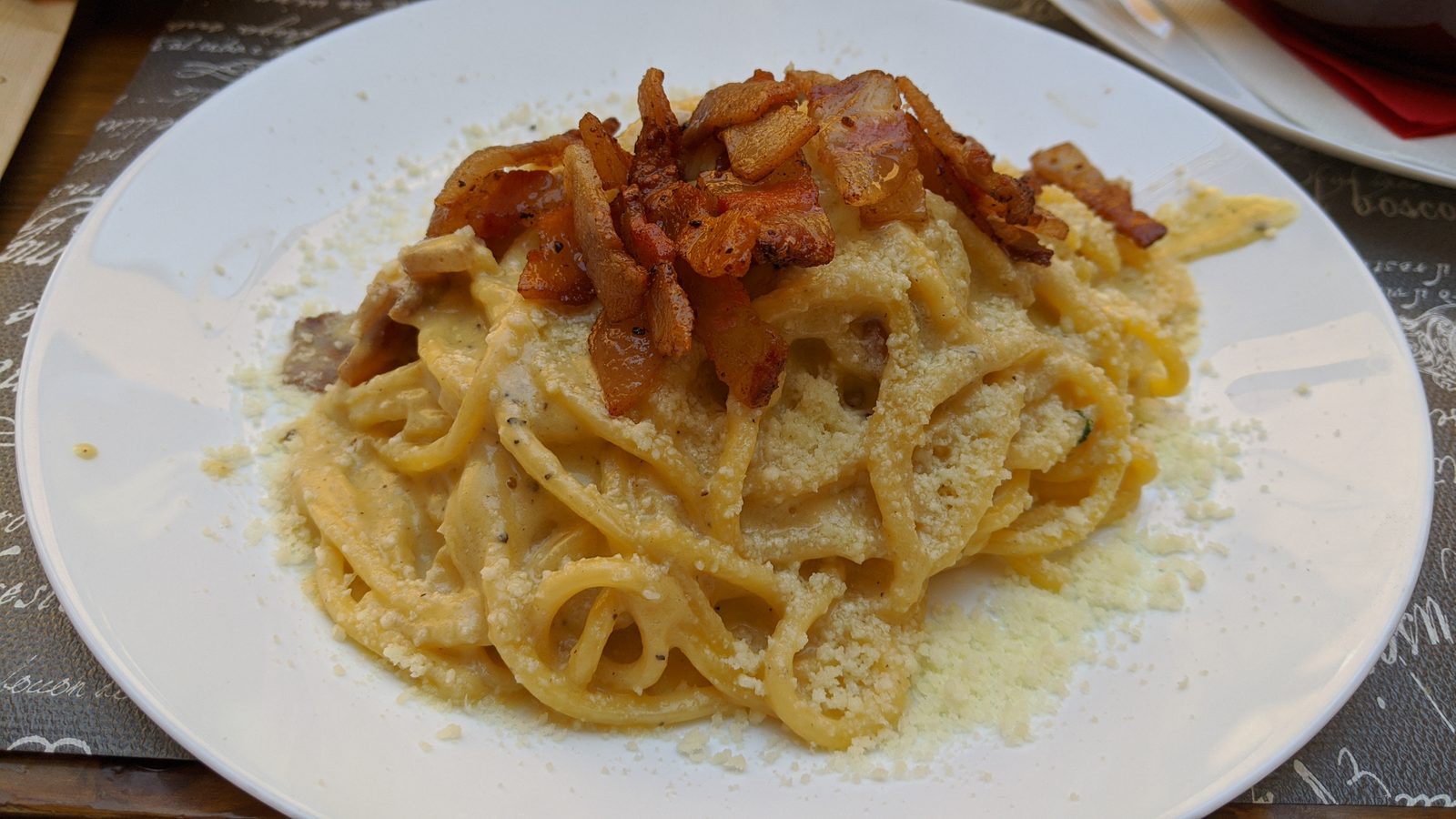
How to spot a real carbonara

There is no cream in a carbonara. None. The sauce is egg yolk, pecorino and the starchy water from the pasta, whipped off the heat into something glossy — if it arrives pale, thick and matte, you are eating a cream sauce, and you are almost certainly in a restaurant that has decided tourists will not know the difference.

The pork is guanciale, not pancetta and certainly not bacon: cured pig’s cheek, rendered until the fat is translucent and the edges crisp. And the pepper is coarse and generous. Rigatoni, spaghetti or the thick tubes of mezze maniche all work; the shape matters less than the emulsion.

Beyond the pasta

Order carciofi alla giudia in the Ghetto — whole artichokes flattened and deep-fried until the leaves shatter like crisps — and carciofi alla romana everywhere else, braised with mint and garlic. Saltimbocca is veal, prosciutto and sage. Trippa alla romana is tripe in tomato with mint and pecorino, and it is far better than it sounds. And supplì — fried rice balls with a molten mozzarella core — are what you eat standing up, waiting for a pizza.

Where and when Romans actually eat

Lunch runs from about one, dinner rarely starts before eight and often closer to nine. A trattoria with a handwritten menu, no photographs of the food, and a room full of people speaking Italian is worth ten with a tout outside. Be suspicious of anywhere within sight of a major monument that has a menu in six languages and a picture of a carbonara on it.

Inside the Rione app

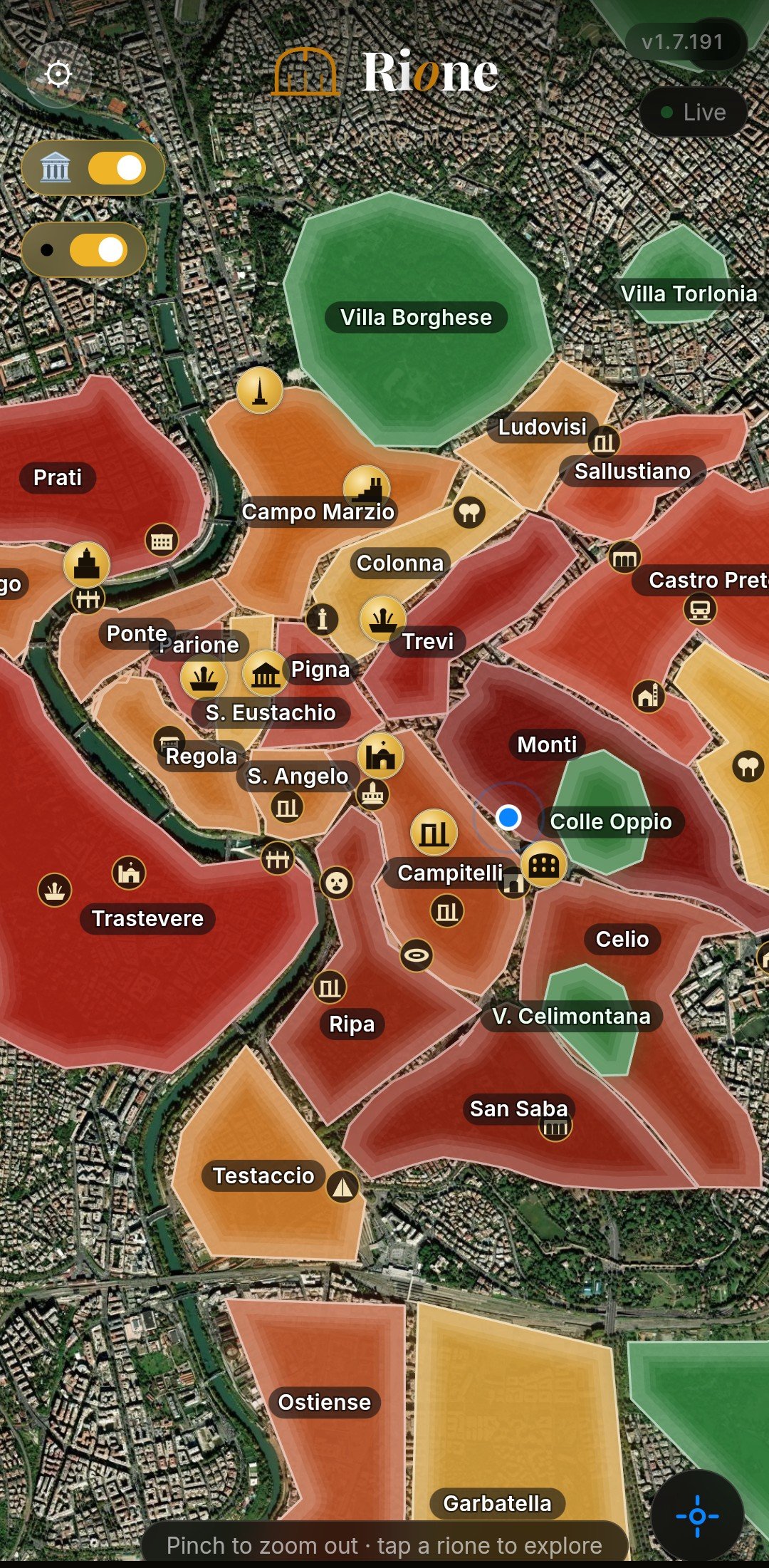
Interactive rioni map of Rome
GPS walking tour route

Custom rioni mapping

Dynamic, interactive boundaries of all of Rome’s historical rioni, colour-coded and tappable.

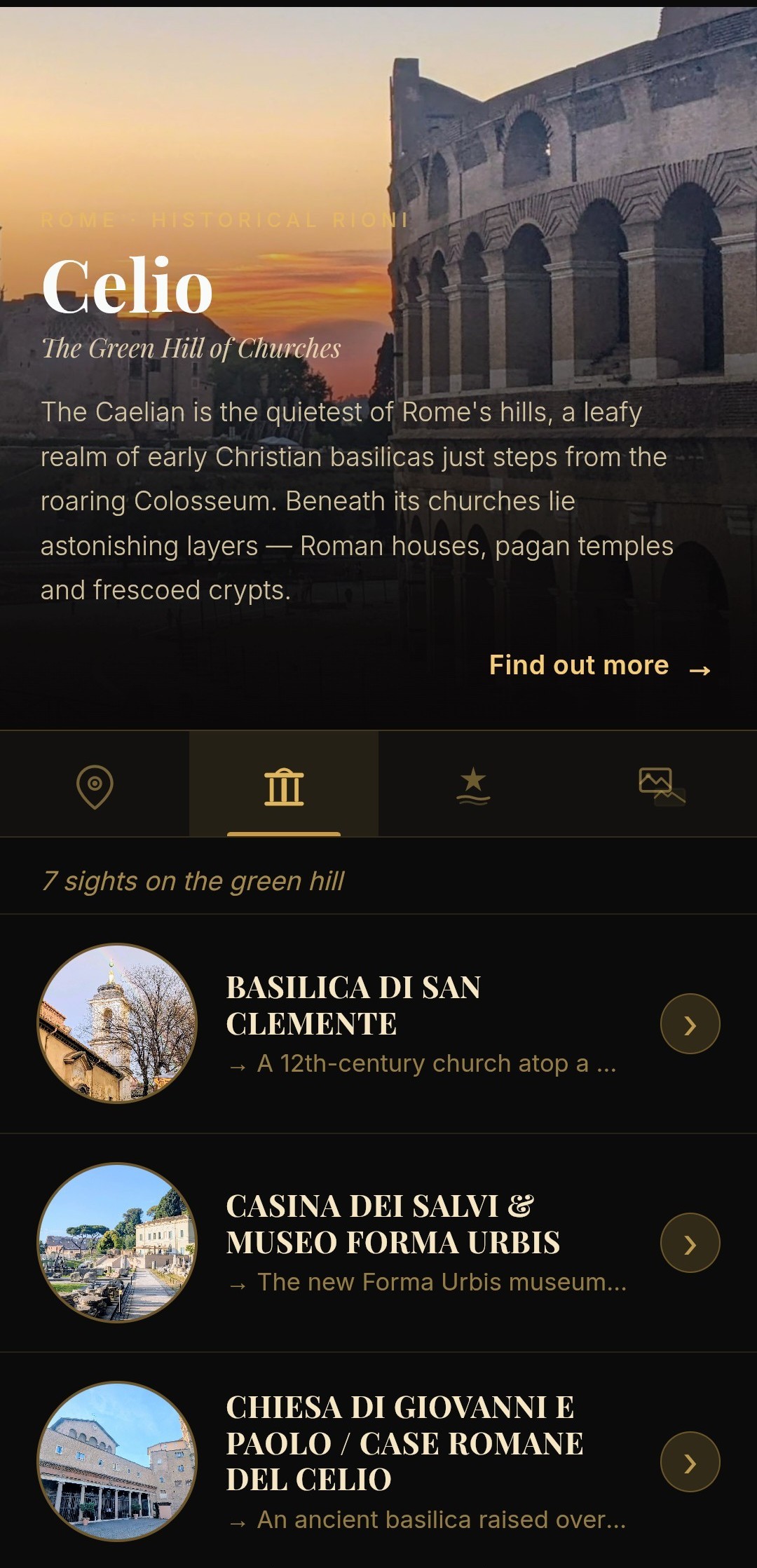
Rione guide with monuments and history
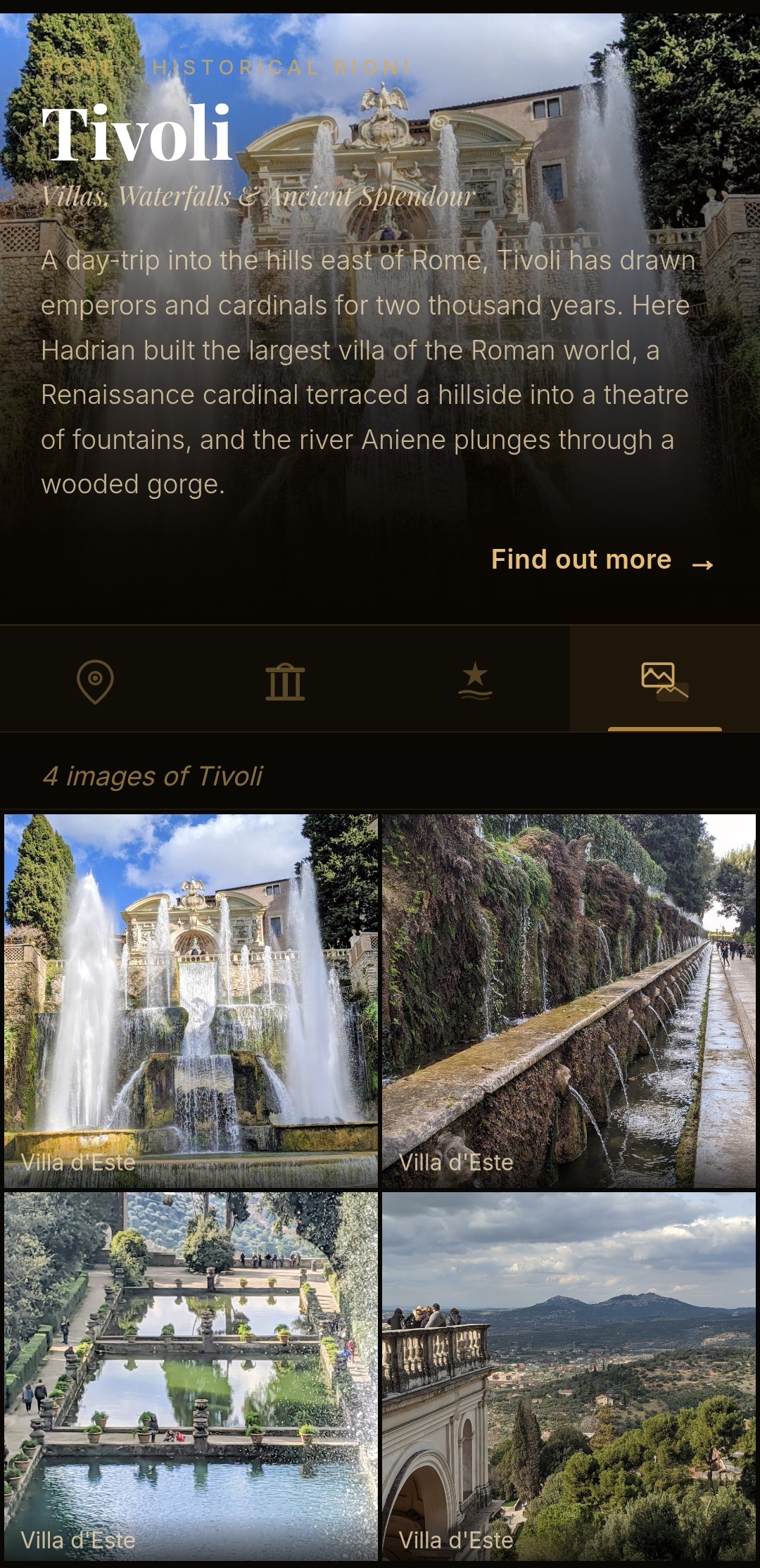
Photo gallery of a Rome day-trip

Authentic sights

Every monument with photos, history and the stories beneath the stones.

Open the interactive guide

Free web appWorks offline in Rome
GPS · maps · audio · 5 languages
Open the interactive guide

More practical guides

Explore more of Rome